

"You don't think about your septic tank until you have to, and by then, it's usually bad news. Choosing the right system today prevents a nightmare tomorrow." It’s the ultimate “out of sight, out of mind” utility. However, for anyone building a new home or replacing an old system, the choice of materials for that tank is one of the most important decisions you’ll make for your property’s long-term health.
A septic tank is a watertight underground container that collects and partially treats household wastewater, specifically fecal matter. Inside the tank: solids settle at the bottom, oils and grease float to the top, bacteria naturally break down the waste, partially treated liquid is released into the sewer system or soak pit. A properly designed and maintained septic tanks keeps harmful pathogens away from your surroundings.
The data shows a clear picture of our sanitation landscape. The Joint Monitoring Report (WHO and UNICEF,2021) states that safe sanitation services have reached 49% of population. However, 83% of Nepal’s households are dependent on on-site sanitation system and only 11% households have access to and are connected to sewered sanitation (UNICEF, 2020). For many families, especially in peri-urban and rural municipalities, septic tanks are the first line of defense for safe sanitation. Because of this, the government has made it mandatory for every household – new or old in urban areas and developing towns across the country – to construct septic tanks. Whether you're in the tight lanes of Kathmandu or the sprawling Terai, choosing the right septic system is the most important "invisible" decision you’ll make.
For years, concrete septic tanks dominated construction sites. However, in the modern Nepali context, they may face three major risks: 1) concrete tanks are rigid and might crack in this high-seismic country, 2) congested and narrow urban space for high capacity tanks, and 3) possibility of mix up during monsoon season.
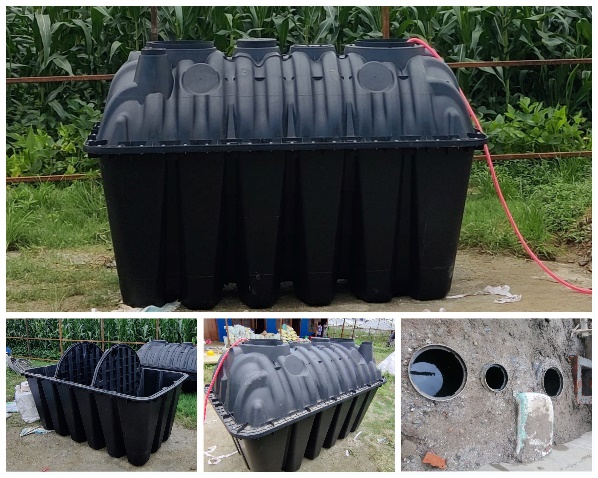
At EcoConcern, we are proud to offer a superior alternative to traditional concrete. Our Ready-To-Install (RTI) Eco Septic Tank is designed specifically for the challenges of Nepal. This tank is:
- Made up of durable plastic that resists cracking and ground movement
- Compact design that requires less space for installation
- Zero leakage, heat and chemical resistant
- Ready-to-use immediately after installation.
Related blog
